
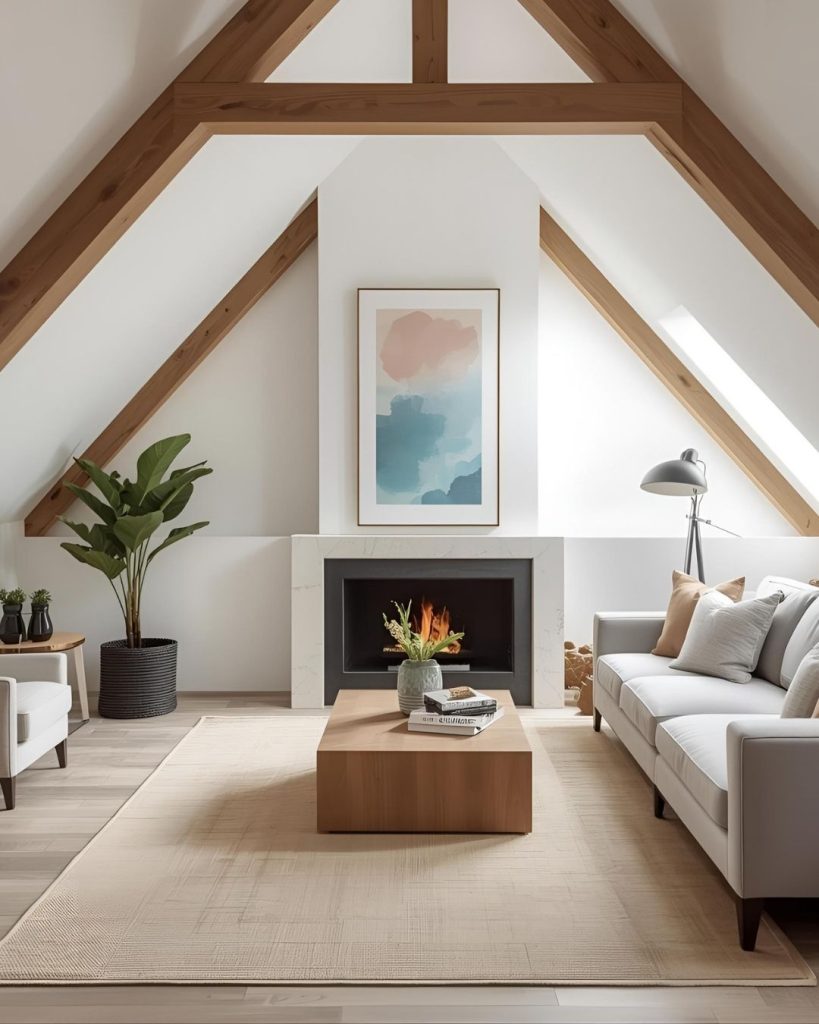
How Much Does a Loft Conversion Cost in Braintree?
A loft conversion is one of the most practical ways to add space to a home without moving. For many homeowners in Braintree, it is also one of the most cost-effective — particularly when you factor in stamp duty, legal fees and moving costs against the price of a well-executed conversion that adds a bedroom, a bathroom or a usable workspace to the property you are already in.
Braintree’s housing stock is well suited to loft conversions across much of the town. The semi-detached and terraced properties built between the 1930s and 1970s across areas like Bocking, Cressing Road, Manor Street and the streets surrounding Braintree town centre tend to have the roof pitch and internal volume that makes a conversion viable without needing to dramatically alter the existing structure. Larger detached homes in Rayne, Black Notley and the villages to the north and west of the town also frequently have the headroom and roof geometry to support more ambitious conversion types.
The question that comes first for most people is what it costs. This post gives you a clear picture — broken down by conversion type, by the factors that affect the final price, and by what is realistic to expect from a reputable local builder in this part of Essex.
What Does a Loft Conversion Cost in Braintree?
Loft conversion costs vary depending on the type of work involved, the size of the roof space, and how the finished room is specified. For Braintree and the surrounding area, realistic installed prices currently look like this:
- Velux or rooflight conversion: £17,000–£27,000
- Dormer loft conversion: £28,000–£50,000
- Hip to gable conversion: £36,000–£56,000
- Mansard conversion: £46,000–£72,000+
These are complete, finished prices — structural work, insulation, staircase, electrics, plastering and a standard internal fit-out are all included. En-suite bathrooms, bespoke joinery and high-end finishes are priced separately on top of these figures.
Braintree sits in a part of Essex where construction labour costs are noticeably more affordable than the commuter belt towns closer to London. You are paying less here than you would in Chelmsford, Brentwood or Epping, and considerably less than equivalent work in East London or the M25 corridor. For CM7 and CM77 postcodes and the wider Braintree district, the figures above are a fair starting point for budgeting purposes.
The Four Main Conversion Types
Velux or Rooflight Conversion
The simplest and most affordable option. The existing roofline stays completely intact — Velux-style windows are installed flush into the roof slope, the floor structure is reinforced to take habitable room loads, insulation is added between and over the rafters, and a new staircase connects the loft to the floor below.
This type of conversion works best where there is already reasonable headroom — a minimum of around 2.2m from the floor joist to the underside of the ridge is the usual benchmark. A number of the inter-war semis across Bocking and the older parts of Braintree have enough roof pitch to make a rooflight conversion viable without any external alteration. The limitation is usable floor area — where the ceiling follows the roof slope on both sides, the floor space at full standing height can feel constrained, particularly in a narrower building.
On-site build time for a rooflight conversion is typically four to six weeks, making it the least disruptive option by a considerable margin.
Dormer Loft Conversion
The most popular conversion type across Braintree’s semi-detached housing stock. A dormer projects outward from the existing roof slope — usually at the rear — creating a vertical-walled extension to the loft space with a flat or shallow-pitched roof. The result is a significant increase in both headroom and usable floor area compared to a rooflight conversion.
Rear dormers are the most common configuration and typically fall within permitted development, meaning no planning application is needed. On a standard Braintree semi, a well-proportioned rear dormer can create a comfortable double bedroom with enough remaining space for an en-suite shower room alongside it.
Build time on site is typically eight to twelve weeks. The early phase — structural work, dormer frame, making the new structure weathertight — needs to be sequenced carefully before internal fit-out can begin in earnest.
Hip to Gable Conversion
Suited to detached and semi-detached properties where the roof has a hipped end — the sloping triangular section at the side of the building rather than a straight gable. Converting the hip to a vertical gable substantially increases the volume of usable loft space, and is usually combined with a rear dormer to maximise the internal layout.
This is a more structurally involved project than a standard dormer and typically runs ten to fourteen weeks on site. It is a common choice on the larger detached properties in villages like Rayne, Great Notley and Stisted, where the roof geometry suits it and the extra volume it creates is genuinely valuable. Because it changes the external roofline more noticeably than a rear dormer alone, planning permission is more likely to be required — particularly on corner plots or streets where the hip profile is characteristic of the surrounding properties.
Mansard Conversion
The most extensive conversion type, a mansard replaces the rear roof slope with near-vertical walls topped by a shallow pitch, creating the maximum possible internal volume at loft level. It is a significant structural undertaking and the most expensive of the four main options.
Mansard conversions are most commonly seen on Victorian and Edwardian terraces, and Braintree has a reasonable amount of this stock in the older parts of the town around the high street and Manor Street. On-site build time is typically twelve to sixteen weeks. Planning permission is almost always required, and the design will be subject to greater scrutiny where the property is in or adjacent to a conservation area.
What Affects the Final Price?
Roof Structure
The type of roof structure your property has affects both the complexity and the cost of the conversion. Houses built before roughly 1965 often have cut rafter roofs — constructed on site from individual timbers with open loft space between them. These are generally more straightforward to work with. Properties built from the mid-1960s onwards are more likely to have trussed rafter roofs, where the loft space is occupied by a web of diagonal timber members that form part of the structural system. These need to be carefully redesigned and restructured rather than simply removed, which adds cost and requires structural engineering input from the outset.
If you are unsure which type your property has, a builder will be able to tell you from a brief inspection of the loft space before quoting.
Staircase
Every loft conversion needs a new staircase, and finding the right position for it involves giving up floor space on the storey below. A straight stair rising from a landing is the most cost-effective solution. Where space is tight — common in the narrower terraced properties in Braintree town centre — a space-saving stair with alternating treads or a quarter-turn design can help, but these cost more and are less comfortable to use on a daily basis. Budget the staircase as a meaningful part of the overall cost rather than an afterthought.
En-Suite Bathroom
Adding a shower room to a loft bedroom is one of the most popular additions and one of the more significant variables in the final cost. A basic en-suite — shower enclosure, WC, basin, tiled walls and floor — typically adds £6,000–£11,000 to the project depending on specification and how far the plumbing needs to travel from the existing supply and waste routes. Getting the plumbing routes confirmed at the design stage avoids surprises once work is underway.
Party Wall Agreements
For semi-detached and terraced properties — which make up a significant proportion of Braintree’s housing stock — structural work affecting a shared wall triggers the Party Wall etc. Act 1996. Written notice must be served on the neighbouring owner at least two months before work starts on the party structure. If the neighbour agrees, the process is relatively straightforward. If they do not consent or appoint their own surveyor, a formal party wall award needs to be agreed before work can begin, which adds both time and cost to the project.
This is worth factoring into your programme planning early. Serving notice as soon as you have a confirmed design is the most effective way to avoid it becoming a delay.
Structural Engineering
Structural calculations are required for every loft conversion — existing floor joists are not designed to carry habitable room loads and will need to be reinforced or replaced as part of the structural scheme. A structural engineer’s report is a standard element of any properly managed loft conversion, and the cost is typically £500–£1,200 depending on complexity. Confirm it is included in any quote you receive rather than being billed separately after the fact.
Planning Permission and Building Regulations
Most loft conversions in Braintree proceed under permitted development, which means no planning application is needed. The key conditions are that the additional volume created does not exceed 40 cubic metres for a terraced house or 50 cubic metres for a detached or semi-detached, that no part of the conversion extends above the existing ridge, and that any side-facing windows are obscure-glazed and fixed shut below 1.7m.
Braintree District Council’s planning area includes a number of conservation areas — the Braintree town centre conservation area and several village designations across the district — where permitted development rights are more restricted. If your property falls within one of these areas, or is a listed building, a planning application is likely to be needed regardless of the size of the conversion.
Building regulations approval is required for every loft conversion without exception, covering structural work, fire safety, insulation, means of escape, staircase design and ventilation. Your builder will manage this process, but it is worth confirming how — whether through a full plans application, which gives greater certainty upfront, or a building notice, which allows work to start sooner but is inspected as it progresses.
Is a Loft Conversion Worth It in Braintree?
For most Braintree homeowners, the answer is yes. Adding a bedroom and bathroom to a three-bed semi in Bocking or a detached house in Great Notley increases the practical value of the property without the cost and disruption of moving. With property prices in the Braintree area having risen steadily over recent years, the return on a well-specified loft conversion is generally strong — particularly where the conversion adds a room type that is genuinely in demand rather than duplicating what the house already has.
If you are considering a loft conversion in Braintree, Witham, Halstead, Dunmow, Coggeshall or anywhere across north Essex, we are happy to come and take a look at your roof space and give you a clear, honest quote. Get in touch to arrange a visit.